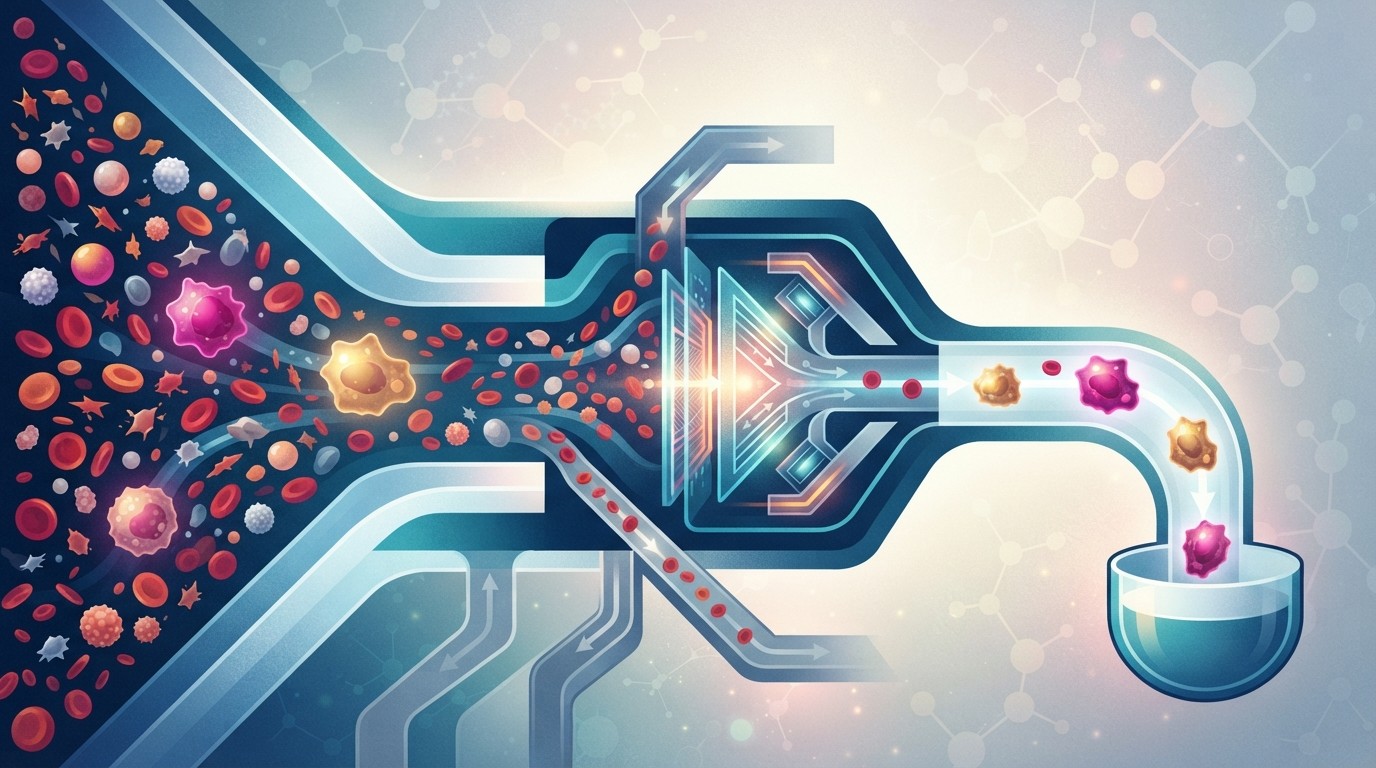
Circulating Tumor Cells (CTCs) are rare cells that shed from primary tumors into the bloodstream, serving as vital biomarkers for cancer metastasis, prognosis, and real-time treatment monitoring. Because they are extremely rare—often appearing as a single cell among millions of white blood cells—isolating intact, viable CTCs is a significant technical challenge.
The Challenges of CTC Isolation
Isolation is hindered by several factors:
Rarity: CTCs represent a tiny fraction of blood components.
Heterogeneity: CTCs exhibit diverse phenotypes, making them difficult to capture using a one-size-fits-all approach.
Fragility: Mechanical or chemical stress during processing can easily damage cells, rendering them unsuitable for downstream analysis like single-cell sequencing or functional assays.
Leading Techniques for Isolation
1. Affinity-Based Enrichment (Positive Selection)
This method targets surface markers, most commonly EpCAM. While highly specific, it often fails to capture cells undergoing Epithelial-to-Mesenchymal Transition (EMT), which lose epithelial markers.
2. Size-Based Filtration (Negative Selection)
CTCs are generally larger than typical blood cells (leukocytes). Using microfluidic chips or membrane filters, researchers can physically trap larger tumor cells while allowing smaller components to pass through. This method is label-independent, which is excellent for preserving cell integrity.
3. Density Gradient Centrifugation
This traditional approach uses differences in buoyant density to separate mononuclear cells from red blood cells and granulocytes. While cost-effective, it is labor-intensive and may lead to cell loss.
Best Practices for Maintaining Intact Cells
To ensure your samples remain viable for downstream workflows, follow these guidelines:
Rapid Processing: Process blood samples within 2-4 hours of collection to minimize apoptosis.
Optimized Anticoagulants: Use specialized blood collection tubes (e.g., Streck Cell-Free DNA BCT or EDTA) designed to stabilize cell membranes.
Gentle Handling: Minimize pipetting and avoid high-speed centrifugation whenever possible to maintain cellular morphology.
Conclusion
Selecting the right isolation strategy depends on your downstream research goals. If you require viable cells for culture, label-free microfluidics are often preferred. If you need pure samples for genomic sequencing, a hybrid approach of enrichment followed by fluorescence-activated cell sorting (FACS) may yield the best results.
Frequently Asked Questions
Why is it difficult to isolate CTCs from blood?
CTCs are extremely rare, often present in a ratio of 1:1,000,000 compared to white blood cells, and they are highly fragile and heterogeneous.
What is the primary advantage of label-free isolation?
Label-free isolation (like size-based filtration) avoids potential bias caused by the variable expression of cell surface markers, allowing for the capture of a broader range of tumor cells.
How long can blood samples be stored before CTC isolation?
For optimal viability, samples should be processed within 2-4 hours. Using specialized stabilization tubes can extend this window to 24-48 hours depending on the storage conditions.